Welcome to visit Shandong Guanxian Rongda Composite Material Co., Ltd


山东冠县荣达复合材料有限公司
Rongda Composites
Annual production capacity of 350000 tons of aluminum and zinc, 100000 tons of galvanized sheet and 200000 tons of color coated sheet
Galvanized sheet
Release time:
2016-08-22
Author:
Source:
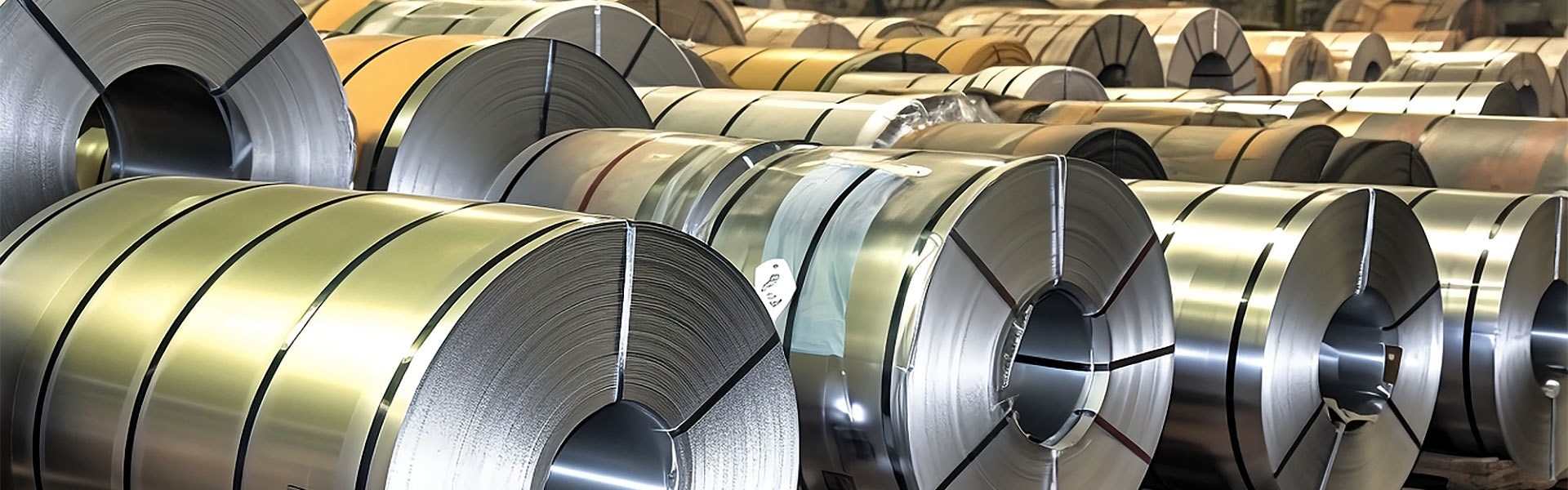
Galvanized steel sheet is to prevent the surface of the steel sheet from being corroded to extend its service life. The surface of the steel sheet is coated with a layer of metal zinc. This zinc-coated steel sheet is called galvanized sheet. According to the production and processing methods can be divided into the following categories: ① hot dip galvanized steel sheet. The thin steel plate is immersed in the molten zinc bath, and a layer of zinc is adhered to the surface of the thin steel plate. At present, it is mainly produced by continuous galvanizing process, that is, the rolled steel plate is continuously immersed in the molten zinc plating tank to make galvanized steel plate; ② alloying galvanized steel plate. This kind of steel plate is also made by hot dipping method, but immediately after the groove, it is heated to about 500 ℃, so that the formation of zinc and iron alloy film. This
Galvanized steel sheet is to prevent the surface of the steel sheet from being corroded to extend its service life. The surface of the steel sheet is coated with a layer of metal zinc. This zinc-coated steel sheet is called galvanized sheet.
According to the production and processing methods can be divided into the following categories:
① Hot-dip galvanized steel sheet. Immersion of sheet steel in molten zinc bath
, so that its surface is adhered to a layer of zinc thin steel plate. At present, it is mainly produced by continuous galvanizing process, that is, the rolled steel plate is continuously immersed in the molten zinc plating tank to make galvanized steel plate;
② Alloying galvanized steel sheet. This kind of steel plate is also made by hot dipping method, but immediately after the groove, it is heated to about 500 ℃, so that the formation of zinc and iron alloy film. This galvanized sheet has good coating adhesion and weldability;
③ Electrogalvanized steel sheet. The galvanized steel sheet produced by the electroplating method has good workability. But the coating is thin, corrosion resistance is not as hot dip galvanized sheet;
④ Single-sided and double-sided differential galvanized steel sheets. Single-sided galvanized steel sheet, that is, only on one side of the galvanized products. It has better adaptability than double-sided galvanized sheet in welding, coating, anti-rust treatment, processing, etc.
In order to overcome the shortcomings of one side without zinc coating, there is also a galvanized sheet coated with a thin layer of zinc on the other side, I .e., a double-sided differential galvanized sheet;
⑤ Alloy and composite galvanized steel sheet. It is made of zinc and other metals such as aluminum, lead, zinc alloy and even composite plated steel plate. This kind of steel plate not only has excellent anti-rust performance, but also has good coating performance;
In addition to the above five kinds, there are color galvanized steel plate, printing coating galvanized steel plate, PVC laminated galvanized steel plate and so on. But the most commonly used is still hot dip galvanized sheet.
Main production plant and import production country:
① Major domestic production plants: WISCO, Angang, Baosteel Huangshi, MCC Hengtong, Shougang, Panzhihua Iron and Steel, Handan Iron and Steel, Maanshan Iron and Steel, Fujian Kaijing, etc;
The main foreign production state-owned Japan, Germany, Russia, France, South Korea and so on.
Dimensions and specifications
Specifications
Zinc layer
Material
0.25*1000*C
80
DX51D Z
0.25*1000*C
80
DX51D Z
0.3*1000*C
80
DX51D Z
0.35*1000*C
80
DX51D Z
0.4*1000*C
80
DX51D Z
0.5*1000*C
80
S280GD Z
0.5*1000*C
80
DX51D Z
0.58*1000*C
80
S350GD Z
0.6*1000*C
80
DX51D Z
0.7*1000*C
80
DX51D Z
0.75*1000*C
80
DX51D Z
0.8*1000*C
80
DX51D Z
0.8*1000*C
80
DX53D Z
0.85*1000*C
80
DX51D Z
0.9*1000*C
80
DX51D Z
0.98*1000*C
80
DX51D Z
0.95*1000*C
80
DX51D Z
1.0*1000*C
80
DX51D Z
1.1*1000*C
80
DX51D Z
1.2*1000*C
80
DX51D Z
1.2*1050*C
150
CSB
1.4*1000*C
80
DX51D Z
Specifications
Zinc layer
Material
1.5*1000*C
80
DX51D Z
1.55*1000*C
180
S280GD Z
1.55*1000*C
180
S350GD Z
1.6*1000*C
80
DX51D Z
1.8*1000*C
80
DX51D Z
1.9*1000*C
80
DX51D Z
1.95*1000*C
180
S350GD
1.98*1000*C
80
DX51D Z
1.95*1000*C
180
S320GD Z
1.95*1000*C
180
S280GD Z
1.95*1000*C
275
S350GD Z
2.0*1000*C
80
DX51D Z
Specifications
Zinc layer
Material
0.36*1250*C
80
0.4*1250*C
80
DX51D Z
0.42*1250*C
80
DX51D Z
0.45*1250*C
225
S280GD Z
0.47*1250*C
225
S280GD Z
0.5*1250*C
80
SGCC
0.55*1250*C
180
S280GD Z
0.55*1250*C
225
S280GD Z
0.6*1250*C
80
DX51D Z
0.65*1250*C
180
DX51D Z
0.7*1250*C
80
DX51D Z
0.7*1250*C
80
SGCC
0.75*1250*C
80
DX51D Z
0.8*1250*C
80
DX51D Z
0.9*1250*C
80
DX51D Z
0.95*1250*C
80
DX51D Z
Specifications
Zinc layer
Material
1.0*1250*C
80
DX51D Z
1.15*1250*C
80
DX51D Z
1.1*1250*C
80
DX51D Z
1.2*1250*C
80
DX51D Z
1.35*1250*C
80
DX51D Z
1.4*1250*C
80
DX51D Z
1.5*1250*C
80
DX51D Z
1.55*1250*C
80
DX51D Z
1.6*1250*C
120
SGCC
1.6*1250*C
80
DX51D Z
1.8*1250*C
80
DX51D Z
1.85*1250*C
90
DX51D Z
1.95*1250*C
80
DX51D Z
1.75*1250*C
80
DX51D Z
2.0*1250*C
80
DX51D Z
2.0*1250*C
120
SGCC
2.5*1250*C
80
DX51D Z
The relevant product standards set out the standard thickness, length and width of the galvanized sheet recommend and its allowable deviation. Generally speaking, the thicker the galvanized sheet, the greater the allowable error, rather than the fixed 0.02-0.04mm. The thickness deviation also has different requirements according to the yield, tensile coefficient, etc. The length and width deviation is generally 5mm, and the thickness of the sheet is generally between 0.4-3.2.
Outside
(1) surface state: galvanized sheet due to different treatment methods in the coating process, the surface state is also different, such as ordinary zinc flower, fine zinc flower, flat zinc flower, no zinc flower and phosphating surface. The German standard also specifies a surface level.
(2) The galvanized sheet shall have a good appearance and shall not have defects harmful to the use of the product, such as no plating, holes, cracks and scum, over plating thickness, scratches, chromic acid dirt, white rust, etc. Foreign standards are not very clear about the specific appearance defects. Some specific defects should be listed in the contract when ordering.
Galvanizing quantity
Standard value of zinc plating amount: zinc plating amount is a commonly used and effective method to express the thickness of zinc layer of galvanized sheet. The unit of the amount of zinc plating is g/m2. The provisions of Japanese, American and German standards on the amount of galvanized steel sheet are as follows.
Mechanical properties
(1) Tensile test:
Index of galvanized steel sheet (unit: g/m2)
JISG3302 code Z12 Z18 Z22 Z25 Z27 Z35 Z43 Z50 Z60
Galvanizing quantity 120 180 220 250 270 350 430 500 600
ASTMA525 code A40 A60 G60 G90 G115 G140 G165 G185 G210
Zinc plating amount 122 183 183 275 351 427 503 564 640
① Performance indicators: Generally speaking, only galvanized sheets for structural, tensile and deep drawing have tensile performance requirements. Among them, the galvanized sheet for structure requires yield point, tensile strength and elongation, etc.; only elongation is required for stretching. For specific values, please refer to the relevant product standards in "8" of this section;
② Test method: The same as the general thin steel plate test method, see the relevant standards provided by "8" and the test method standards listed in "ordinary carbon steel sheet.
(2) Bending test:
Bending test is the main item to measure the performance of sheet technology, but the national standards for a variety of galvanized sheet requirements are not consistent, the United States standard in addition to the structural level, the rest are not required to bend and tensile test. Japan, on the other hand, requires bending tests except for structural grade, building corrugated plates and general corrugated plates.
Requirements: Generally, after the galvanized sheet is bent and 180, there shall be no zinc layer on the outer surface, and the board base shall not be cracked or broken.
Chemical composition editor
The requirements for the chemical composition of the galvanized sheet substrate are different from the national standards. The national standard is generally to detect the content of carbon, manganese, phosphorus, sulfur and silicon.
Packaging Editor
It is divided into two kinds: galvanized sheet cut into length and galvanized sheet with roll packaging. General iron packaging, lined with moisture-proof paper, with iron waist tied on the bracket. Strap firmly to prevent the inner galvanized sheet rubbing against each other.
foreign standard
Product Standards
JIS G3302-94 galvanized steel sheet;
JIS G3312-94 painted galvanized iron sheet;
JIS G3313-90(96) Electrogalvanized steel sheet and strip; General requirements for hot-dip galvanized steel sheet;
ASTM A526-90 Commercial Grade Hot Dip Galvanized Steel Sheet;
ASTMA 527-90(75) bite forming grade hot dip galvanized steel sheet;
ASTMA528-90 deep-drawing grade hot-dip galvanized sheet steel; hot-dip galvanized sheet steel for roofing and siding;
Hot-dip galvanized steel sheet for ASTMA444-89 ditches;
ASTM A446-9 3 Structural Grade Hot Dip Galvanized Steel Sheet;
ASTMA599-92 cold-rolled electrogalvanized steel sheet;
ASTMA642-90 hot-dip galvanized special deoxidizing deep-drawing grade sheet steel;
ΓOCT7118-78 galvanized sheet steel;
DINEN10142-91 part 1 mild steel hot-dip galvanized steel strip and plate;
DINEN1012-92 part 2 hot-dip galvanized steel sheet.
Test standard
JIS H0401-83 Test Method for Hot Dip Galvanizing;
DIN50952- 69 test method for hot-dip galvanizing.
Indicators
Galvanized steel strip products are mainly used in construction, light industry, automobile, agriculture, animal husbandry, fishery and commercial industries. Among them, the construction industry is mainly used to manufacture anti-corrosion industrial and civil building roof panels, roof grilles, etc.; the light industry uses it to manufacture home appliance shells, civil chimneys, kitchen utensils, etc., and the automobile industry is mainly used to manufacture corrosion-resistant parts for cars, etc. Agriculture, animal husbandry and fishery are mainly used as food storage and transportation, meat and aquatic products frozen processing utensils, etc.
List of Technical Indexes, Properties and Specifications of Galvanized Sheet
Surface treatment of hot-dip galvanized steel sheet (coil)
L Chromic acid passivation
Y Oiling
LY chromic acid passivation and oiling
GZ finishing machine finishing
surface structure
Surface Structure Features Uses
Normal zinc flower (Z) Zinc flower obtained by condensation of zinc layer under normal conditions after galvanizing
Finishing zinc flower (GZ) is used to finish the galvanized sheet through the finishing machine, and the zinc flower on the surface of the galvanized sheet is mainly used as the substrate of the color coated sheet.
Medium-wide galvanized sheet
Processability Yield strength Tensile strength Elongation% 180o Cold bending
Ordinary PV-270-500-d = 0, intact, non-dezincified deep drawing SC - 270-380 ≥ 30 d = 0, intact, non-dezincified
Mechanical bite JY-270-500-d = 0, intact, non-dezincification super deep drawing SC - 270-380 ≥ 30 d = 0, intact, non-dezincification
Structure JG≥ 240 ≥ 370 ≥ 18 d = 0, intact, no dezincification
Development Status Editor
Market Overview
In recent years, the production of galvanized sheet in China has increased year by year, and the import volume has also increased year by year, and the growth rate is even higher than the increase in production; after deducting repeated production statistics, the consumption of galvanized sheet is about 5.27 million tons. After 1999, the import volume of galvanized sheet exceeded the production volume for the first time, and the self-sufficiency rate of domestic products was less than 50%, and there was a trend of decreasing year by year.
(1) Galvanized sheet consumption status
In recent years, the increase in domestic galvanized sheet production is mainly due to the increase in hot-dip galvanized sheet production. From 1998 to 2002, the production of hot-dip galvanized sheet increased from 970000 tons to 2.2 million tons. The import volume increased faster, from 370000 tons in 1998 to 1.56 million tons in 2002. Apparent consumption increased from 1.32 million tons to 3.67 million tons. In 2002, the domestic product self-sufficiency rate of hot-dip galvanized sheet was about 60%, and the domestic production and import volume of hot-dip galvanized sheet increased compared with the previous year, especially the import volume increased even more, mainly due to the increased demand for thin-gauge hot-dip galvanized sheet for color-coated sheet production, resulting in a decline in the self-sufficiency rate of domestic products.
(2) Current consumption status of galvanized sheet
In recent years, with the rapid development of the family car market, the basic popularity of household appliances and personal computers, the export of a large number of electronic products, and the development of the anti-theft door market, the demand for electro-galvanized sheets has grown too fast. At present, the production scale of galvanized sheet in China, whether in terms of quantity or variety and quality, can not meet the needs of the domestic market. From 1998 to 2002, the domestic production of galvanized sheet increased slowly, from 170000 tons to 400000 tons; while the import volume increased rapidly, from 730000 tons to 1.78 million tons; the apparent consumption increased from 870000 tons to 2.16 million tons. The self-sufficiency rate of domestic products is less than 20%.
Import analysis
The increase in domestic consumption of galvanized sheet is mainly driven by imports. In recent years, the import volume of galvanized sheet has increased year by year, and the imported varieties are mainly electrogalvanized sheet, but the proportion of electrogalvanized sheet imports has decreased year by year; accordingly, the proportion of hot-dip galvanized sheet imports has increased year by year. In 2003, China's imports of hot-dip galvanized sheet exceeded the imports of electro-galvanized sheet for the first time.
Development of High Performance Hot Galvanized Sheet at Home and Abroad
1. Overview
At present, there is still a certain gap between China's iron and steel industry and the world's advanced level in terms of variety, quality, cost, service and labor productivity. In the face of increasingly fierce international and domestic market competition, we must speed up the pace of structural adjustment, which is not only the need for the survival and development of China's metallurgical industry, but also the development trend of the world's metallurgical industry. Hot dip galvanizing (Hot Dip Galavnizing) was invented in the middle of the 18th century, it is developed by the hot dip galvanizing process. After 50 years of development, continuous hot-dip galvanizing has become a mature and technologically advanced industrial technology. So far, hot-dip galvanizing is still the most common and effective process measure in the application of steel corrosion prevention methods. In the construction industry, it is used for light steel keel, building layer panel, corrugated board, rolling shutter door, etc. of various industrial and civil buildings; in household appliances and light industry, it is used for shell and floor of various household appliances; galvanized steel plate is widely used in light industry, household appliances, automobile and construction industry. In the automobile industry, for the car body, shell, inner plate, floor, etc. China is vigorously developing electricity, transportation, communications, energy and urban infrastructure. With the strong development of construction, home appliances and automobile industries, China's galvanizing industry is facing unprecedented opportunities and huge market.
In the past two decades, the continuous hot-dip galvanizing technology, equipment and corresponding control methods have been greatly developed, so that the galvanized sheet can meet the demanding requirements of automotive panels and home appliance panels, and thus it is cheaper than the electro-galvanized alloy steel strip, excellent corrosion resistance and great potential to replace. This project intends to learn from foreign advanced high-performance automotive hot-dip galvanizing production technology and equipment development technology and experience, through technological innovation, optimization design, precision manufacturing and foreign technical cooperation, break through the constraints of China's high-performance automotive hot-dip galvanized steel production technology and equipment development bottleneck. At the same time, the significance and prospect of the development of hot galvanizing technology in the sustainable development of national economy, energy conservation and mineral resources are discussed.
2. Development situation of high-grade hot-dip galvanized sheet for automobile at home and abroad
Automotive industry products have the requirements of high efficiency, high reliability and high integration. Hot-dip galvanized steel sheets for automobiles are the best and best of galvanized steel sheets. Since the United States first applied hot-dip galvanized sheet to the automobile industry in 1975 for more than 20 years, the world's major automobile production countries have been working hard to develop and develop high-quality hot-dip galvanized sheet with anti-corrosion as the goal and comprehensive consideration of weldability, coating and formability, and have made a series of technological advances, including the chemical composition of the steel substrate, the rolling quality of the steel sheet surface, and the uniformity of hot-dip galvanized coating thickness, A series of technical problems such as the best structure and process control of alloying. After 20 years of research, the above technical problems and the process equipment to complete this technical requirement have been basically solved and a large number of applications in automobiles have begun. The successful application of these technologies can greatly improve the working state of automobiles, extend life and save energy.
High surface quality, high strength and high deep-drawing are the basic conditions necessary for automotive panels. The surface quality of the coating is directly related to the surface quality roughness, cleanliness, chemical composition of strip steel and its stamping formability. At the same time, hot-dip plating process, zinc liquid composition and hot-dip plating equipment are also important factors affecting the surface quality of the coating. High strength and high stamping and hot-dip galvanized substrate chemical composition, physical properties, heat treatment process and hot-dip performance are closely related, the following will focus on foreign and domestic automotive high-stop hot-dip galvanized plate coating varieties, substrates, processes and equipment and other aspects of the development status and trends.
Development Trend of Hot-dip Galvanized Sheet 2.1 Abroad
2.1.1 Development status of hot dip galvanized coating varieties
1) Lead-free hot-dip galvanized coating
Beautiful zinc flower is a typical feature of traditional hot-dip galvanized sheet, which is favored by users and has certain commercial value. However, studies have shown that the unevenness of the surface of zinc flowers and the lead content in the coating will affect the processing performance, coating performance and corrosion resistance of the plated plate in the subsequent processing. Therefore, since the 1960 s, foreign countries have been studying the production technology of zinc-free flowers and small zinc flowers. Through water mist cooling, Heurfey spraying zinc powder and other processes, can increase the number of crystal crystallization nucleation and control crystal growth, to achieve the purpose of producing small zinc flower plate. Since the 1980 s, foreign countries have begun to study lead-free hot-dip galvanizing technology. At present, new galvanizing production lines in Europe and South America adopt lead-free galvanizing process, and lead-free galvanizing has become the current trend of hot-dip galvanizing development.
2) Alloying coating of hot-dip galvanized sheet
In the hot-dip galvanized varieties, through the post-plating thermal diffusion treatment, the development of alloyed galvanized sheet, corrosion resistance than ordinary hot-dip galvanized sheet more than doubled, through this alloying treatment can eliminate the surface of the coating zinc flower; while reducing the amount of zinc evaporation during spot welding, reducing the spot welding copper electrode by zinc vapor pollution, thereby improving the life of the electrode. In order to ensure good adhesion of the coating of the alloyed galvanized sheet, efficient heating and cooling measures (efficient nozzle burning or induction heater) are adopted for the thicker alloyed galvanized sheet of the outer plate for automobiles, and various types of alloying sensors are equipped. The corresponding structure in the coating is adjusted in time through instrument analysis and computer instructions to produce the requirements suitable for high stamping deformation.
Due to the conditions when the automobile is used in stamping and forming, in addition to the requirement that the steel sheet substrate has the necessary excellent mechanical properties, the requirements for the adhesion of the coating (alloying layer) are also very strict.
In the past 20 years, a large number of studies have been carried out on the relationship between the stamping formability of alloyed galvanized sheet and the microstructure of the coating, and the results show that the key to achieve good coating adhesion is the phase structure and iron content of the coating. In order to obtain the best phase structure and suitable iron content of the coating, the homogenization technology and alloying control technology of the coating were developed. In order to strictly control the phase structure of the coating, the heating during the alloying process and the subsequent cooling process must be precisely controlled. Its measures are as follows:
(1) The coating reflection factor is set between the alloyed heating zone and the insulation zone to determine the alloying of the coating surface, and the temperature of the steel belt is controlled to be kept in the temperature range of the stable formation of the 1 phase (laser beam method);
(2) A high thermometer and emissivity tester are installed between the heat preservation and spray cooling zones to simultaneously measure the temperature and emissivity of the steel strip;
(3) After cooling, the steel belt is alloyed in the appropriate position to the phase structure sensor to measure the iron content in the coating and the thickness of the phase layer of the layer (fluorescence method or X-ray diffraction method);
(4) The coating thickness (weight) measuring instrument (fluorescence X-ray method) is set before the steel strip enters the alloying furnace after passing through the air knife and after the phase structure sensor.
3) Two-layer alloyed hot-dip galvanized steel sheet
Alloyed galvanized sheet is prone to film defects such as bubbles during painting, and Nippon Steel has developed a two-layer alloyed hot-dip galvanized steel sheet. The composition of the galvanizing layer of the two-layer alloyed hot-dip galvanized steel sheet is a hot-dip galvanized 10 � Zn alloy layer on the bottom layer of the steel sheet. The zinc adhesion amount is 30g/m2 for 5 years and 60g/m2 for 10 years. The upper layer is an electro-galvanized iron-rich 80�Zn layer with an adhesion amount of 3 g/m * 2. The experimental results show that the newly developed two-layer alloyed hot-dip galvanized steel sheet, with a bottom layer of 10 � Zn and an adhesion of 30~60g/m2, can fully meet the corrosion resistance requirements of automobiles. The adhesion amount of the iron-rich 80Zn layer in the upper layer is 3g/m2, and the hardness of the upper layer is improved, which not only solves the crater defect, but also reduces the punching pressure. For example, when the adhesion amount of 80Zn layer is 1g/m2, its hardness is 300HV and the stamping force is 1960Mpa, and there are still crater defects at this time. When the adhesion amount is 3g/m2, the hardness is 350HV and the stamping force is 1770MPA. At this time, there is no crater defect, which shows that the newly developed two-layer alloyed galvanized steel sheet has good processing and forming properties.
4) Differential thickness zinc layer
With the method of controlling the pressure of the air knife, the thickness difference ratio of the galvanized layer on both sides is often 1:3. The thick side of the zinc layer has good corrosion resistance and the thin side has good weldability. This variety is often used in automobile manufacturing.
5) Single-sided coating
One-sided zinc layer is a hot-dip galvanized sheet with a certain zinc layer thickness on one side and no galvanized on the other side. The production methods of single-sided hot-dip galvanized sheet are zinc-repellent method, direct method, indirect method and double-layer separation method. Single-sided hot-dip galvanized sheet is mainly used for automobile manufacturing. The surface with zinc layer is anti-corrosion, and the surface without zinc layer is conducive to spot welding. Due to the good weldability of alloyed plates (zinc-iron alloys), single-sided galvanized plates have been gradually eliminated.
2.1.2 Development Status of Hot Dip Galvanized Substrate
The hot-dip galvanizing unit of automobile plate focuses on the production of outer plate. The thickness of the production specification plate is mostly between 0.6~1.2mm, the width of the plate is mostly 800~1850mm, and the widest width can reach 2000mm. The product level is quite complex, from CQ, DQ, DDQ, EDDQ(IF), to BH, DP, TRIP and other high-strength steel plates for automobiles. Through the use of a variety of advanced technologies, the coating morphology, thickness accuracy and so on are accurately controlled, such as coating thickness error is less than 2~3g/m2. Through the use of lead-free galvanized can produce zinc-free steel plate, this coating is not easy to produce intergranular corrosion, long service life, suitable for automotive and electrical industries. Almost every hot galvanizing unit in Japan is equipped with a zinc-iron alloying furnace. The standard galvanized layer thickness of the zinc-iron alloying plating plate (Galavneal) is 160~180g/m2 on both sides, and the alloy coating contains Fe8%~ 12% [2].
Foreign countries developed microalloyed steel and phosphorus alloy steel in the 1970 s, bidirectional DP steel and bake hardening steel in the mid -1980 s, and phase transformation and induced plasticity TRIP steel in the 1990 s [3]. At present, the international cooperation project "Ultra-light Steel Car Body (ULSAB) Development" is proceeding smoothly. Its goal is to achieve a fuel consumption of 34KM/3L (USA) and a weight reduction of 25%. The basic starting point is to use a large number of high-strength and ultra-high-strength steel plates in the body structure. The biggest feature of the ultra-light steel car body through the large ULSAB is that it does not achieve the purpose of reducing the weight of the car at the expense of performance [4]. Ultra-light steel car body structure with high-strength steel proportion of more than 90% as the design basis, Japan in 1985 to 1995 years, the proportion of high-strength steel body increased from 10% to 30%, with the improvement of surface treatment performance, car life from 6. 7 years extended to 9. In 3 years, after deducting the energy increase in the manufacture of high-performance chemical steel plates, 357 * 104L of heavy oil can be saved in one year, which is equivalent to saving a few percent of the energy consumption of the domestic steel industry. In 2000, the use of high-strength steel plates in Japanese automobile manufacturing has reached 36.3 percent.
The types and properties of the hot-dip galvanized substrates currently developed are described below.
6) IF steel alloyed galvanized sheet
The use of high-quality rimmed steel and killed steel is difficult to produce for automotive stamping forming demanding galvanized sheet. For this reason, IF steel (interstitial free atomic steel) appeared in the 1970 s. It has excellent stamping formability, which is suitable for the inner and outer panels of automobiles. IF steel has excellent deep drawing performance and can meet the stamping requirements of most difficult stamping parts, so it is gradually replacing 08AL series of automotive steel. At present, IF steel has been widely used in DDQ steel plate abroad. Each high-strength steel is also produced on the basis of IF steel by adding Mo, Cu, P and other elements.
The emergence of IF steel has put forward higher requirements for the technical level and management level of iron and steel enterprises. In terms of technology, molten iron pretreatment technology must be adopted to ensure that molten iron with low phosphorus, sulfur and silicon is used as raw material for steelmaking. Post-furnace refining technology and online carbon and oxygen analysis technology must be adopted to ensure high composition accuracy and purity of molten steel. RH (high-speed decarburization process for ultra-low carbon steel) must be adopted to ensure extremely low carbon and gas content in molten steel. Low-carbon covering agent, protective slag and refractory material must be adopted, to ensure that molten steel does not return carbon, the surface of the plate blank must be cleaned for the outer plate of the automobile. The strip temperature control technology from heating to finish rolling and coiling must be adopted to ensure the uniform mechanical properties of hot rolled strip steel. High-precision hot rolling and cold rolling technology must be adopted to ensure excellent plate shape and high-precision size, as well as technology to prevent roll printing and coiling defects, etc. Consistent production process quality assurance system is necessary, that is, in steelmaking, continuous casting, hot rolling and cold rolling of each process, must be strictly in accordance with the end use of the product to organize production, especially in the frequent change of steel varieties, must adopt the corresponding measures to ensure the quality of the final product. Another major issue is how to connect the galvanizing line with other production processes through a comprehensive overall production system to minimize costs. In short, the production of galvanized sheets for automobiles is a very big challenge for every steel company, especially domestic steel companies.
7) Hot-dip galvanizing of solid solution strengthening steel plate
In order to improve the strength of steel, Si, Mn and P are usually added for solid solution strengthening, and the structure of martensite and bainite is used for strengthening. For DP dual-phase steel, the martensite structure can be obtained by controlling the content of alloy elements and adopting the critical cooling rate.
The requirements as an automotive panel are low yield strength ós <240Mpa>) and high ¥ value. In IF steel, P, Mn, Si and other solid solution strengthening elements are added. Since this steel has no solid solution C and N, it is basically a non-aging steel plate. However, when there is no solid solution C, it is easy to cause secondary processing embrittlement, so trace B can be added to prevent it. When P is the main strengthening element, ób can reach 340 ~ 370Mpa, while Mn and P are the main elements. Its ób can reach 390 ~ 440Mpa[5].
8) Bake hardening type (BH steel) and heat treatment strengthening type steel plate
BH steel refers to bake hardening steel. IF steel belongs to ultra-low carbon steel, BH steel has a C content of 0.016~0.020. By strain aging and strengthening method, the residual trace (5ppm) of solid solution C in ultra-low C steel generates dislocation during stamping forming, and Fe-C compounds will precipitate and fix dislocation during coating baking (170 ℃,20min) later, thus increasing its strength. The BH cold-rolled steel plate produced by adjusting the chemical composition also has good deep-drawing performance, adding trace elements such as Nb and Ti to form carbon and nitrogen compounds in the rolling state. Its R value is 1.92~2.06. This BH cold-rolled steel plate can increase the tensile strength of auto parts by 40 ~ 70MPA at the paint baking temperature of 170'C. At present, 340Mpa grade BH cold rolled steel plate has been developed [6].
9) Microstructure-reinforced high-strength steel plate
By changing the microstructure of the steel, the strength (440~1470MPa) can be improved in a large range. At present, three high-strength steel plates have been developed, and the representative steels are dual-phase (DP) steel plate and bainitic steel plate. This steel has low yield strength, high work hardening index and good formability. In addition, TRIP (metamorphosis-induced superplastic steel) and ultra-high-strength steel plates are expected to be applied to automobiles on a large scale. At present, the hot-dip galvanizing and alloying treatment of these steel plates have not been studied except for DP steel plates with a small amount of hot-dip galvanizing [7]. The hot-dip galvanizing and alloying treatment of these steel plates will be technically difficult and need us to explore [8].
The research of hot-dip galvanized substrate must be combined with the hot-dip galvanizing process, otherwise even if the substrate meets the required performance, the galvanizing process cannot meet the requirements and cannot achieve the purpose.
2.1.3 Development of Galvanizing Technology
In order to obtain high-quality surface, the newly-built galvanizing production lines abroad in the 1990 s adopted a large number of US-steel joint methods. The US-steel joint method adopted high-density electro-deesterification technology (HCD) to quickly and effectively remove oil stains on the surface. At the same time, the US-steel joint method replaced the open flame heating in the modified Sendzimir method with full radiant tubes in the reduction annealing furnace. Therefore, the temperature and atmosphere can be strictly controlled and atmosphere, so as to ensure the excellent adhesion and surface quality of the coating.
The process layout of the traditional hot-dip galvanizing line is to set up a light machine. The modern broadband steel hot rolling galvanizing unit for producing automobile plates is generally equipped with two finishing machines in the process layout. The first finishing is to use a four-roll finishing machine to flatten the surface of the strip steel to eliminate the uneven appearance of the surface. The second finishing is to select a two-roll finishing machine to give the strip a certain roughness.
Traditional hot-dip galvanizing lines are double loopers, arranged at the outlet and inlet of the process section. Due to the extremely high requirements for the plate surface of the automobile plate, sometimes 5~10 rolls need to be replaced with the finishing roller when finishing the automobile plate. In order to realize the roller replacement without stopping the process section and improve the operation rate, some units add a looper in front of the finishing machine, I .e. form a process layout of three loopers in one line, and the storage time of the newly added looper is generally 120s.
The production capacity and product quality of the newly put into operation foreign hot-dip galvanizing or retrofitting old hot-dip galvanizing units have been further improved. The newly-built production lines in developed countries can produce hot-dip galvanized steel plates with a width of 2100mm, a unit speed of up to 200 m/min, an alloying speed of 136 m/min and an annual production capacity of 600000 tons.
2.1.4 Development status of hot dip galvanizing equipment
The air knife is a key component to control the thickness and uniformity of the coating. The new air knife adopts an adjustable integral frame structure, which can reliably and accurately adjust the gap and angle between the air knife and the steel belt, and adjust the distance between the air knife and the zinc pot. The lip gap can be automatically controlled to ensure the flatness and uniformity of the coating.
Zinc slag in zinc solution is the most important factor affecting the surface quality of galvanized sheet. In modern production lines, ceramic lined pots have been used to replace iron zinc pots, and movable or upgraded double zinc pots have been used to replace bath conversion. The aluminum and corresponding iron contents in zinc solution can be strictly determined by online measuring probe (Al sensor) and corresponding zinc solution composition control system, which can effectively reduce the influence of zinc slag on the surface quality of galvanized sheet.
The vertical zinc pot designed by using the magnetohydrodynamic closure (NHD) created by the electromagnetic moving field can eliminate the components in the original zinc pot, and obtain the advantages of high speed, no zinc slag, energy saving, and improving the surface quality of the zinc layer [9]. The working principle of this method is: when the liquid Zn (or Al, ZnAl) alloy flows out from the bottom of the pot and enters the MHD channel to a certain depth (the depth depends on the specific gravity of the metal liquid, the height of the liquid level, the current size and other factors), the external electromagnetic moving field generated by the AC inductor generates an induced current in the zinc liquid, and the interaction between the current and the external electromagnetic field generates an electromagnetic force, which acts on the metal fluid to move upward. Therefore, the zinc liquid cannot flow out from the opening at the bottom of the pot. When the steel strip enters the zinc pot from its bottom channel, the zinc liquid is always in a position at the channel, and no steel structure is required in the zinc pot.
In order to improve the operating speed and production efficiency of the unit, and reduce the formation of surface slag and bottom slag, relevant foreign research units have successively developed "zinc pad" technology and "vertical zinc pot technology". The "zinc pad" technology works on the principle of a liquid metal pad. The steel strip is pressed down by the liquid metal pressure through the zinc pad. Since the sink roller is not used, the surface quality of the product is improved, the production efficiency is improved, and the cost is reduced. It is especially suitable for high-speed units.
Due to the emergence and application of laser welding technology, automobile factories can weld narrow plates together and use them, which makes the production of small wide plates (width 1800mm or more) no longer necessary, but the width of products in cold rolling mills reaches 1550mm, which can produce galvanized steel plates for automobiles.
With the continuous development and application of these advanced technologies and equipment, the proportion of hot-dip galvanized steel used in automobile manufacturing is increasing. For example, Japan has reached 81%, Canada 76%, Italy 71, France 70%, Germany 60%, the United States 45%. Due to the superiority of the cost and quality of alloyed galvanized sheet, the Japanese automobile industry decided to use alloyed galvanized sheet to replace the existing galvanized alloy sheet by 2005.
Development Status and Trend of Hot-dip Galvanized Sheet in 2.2 and China
With the rapid development of China's automobile industry, the use of hot-dip galvanized sheets for automobiles has also increased sharply. Although several large-scale domestic steel complexes have completed or are close to completing the technological progress from steelmaking to cold rolling, they have introduced a number of production units for high-grade galvanized sheets for automobiles and have the ability to produce high-grade automobile steel sheets. The time is ripe for China to develop its own galvanized sheets for automobiles. However, up to now, due to the limitation of production scale and product quality, domestic hot-dip galvanized sheet can not fully meet the requirements of China's automobile industry for the quantity and quality of galvanized sheet. Due to the single positioning of unit products, a considerable part of foreign countries have developed and matured, and many high-grade galvanized sheet varieties have been widely used in automobiles abroad.
In general, the galvanized sheet for domestic automobiles has the following characteristics:
1) Late start and rapid development
China's modern continuous hot-dip galvanizing technology has just started since the 1970 s, but it has developed rapidly, especially in the 1990 s, which has become a period of rapid development, bringing about new developments in China's surface coating technology.
2) The world is still very far away
(1) Insufficient products, scarce varieties, poor quality
At present, there are only universal pure zinc products in our country, and the surface is only universal zinc flower. There are no products such as single-sided galvanizing, double-sided differential thick galvanizing, small zinc flower, zinc flower-free galvanizing, hot galvanizing alloying layer, IF steel high-strength hot galvanizing, etc. used in rapidly developing automobiles, and some are still in the stage of research and trial production.
Domestic steel hot-dip galvanizing products are far away from foreign corresponding products in terms of corrosion resistance, workability and decoration, and domestic products lack international competitiveness.
(2) Lack of independent intellectual property rights technology
In addition to some small units, China's large-scale unit surface coating technology is almost all the introduction. In the introduction often bring greater blindness, most of the unit level is not high, the general level, similar level of technology, mature, repetitive technology. General products, similar products, high-tech products less, less independent research and development technology.
(3) Small units have high energy consumption and heavy pollution
China's township enterprises, private enterprises to build more than one hundred small hot-dip galvanizing units, the annual output of thousands of tons to tens of thousands of tons, the unit technology is backward, because there is no gas equipment to switch to electric heating, resulting in high energy consumption. In order to save investment, the production of waste liquid, waste, waste gas generally do not have treatment equipment, often directly discharged to cause environmental pollution. Strong market demand, unique mode of operation, so that it still occupies a certain market share.
3) Low conversion rate of scientific research achievements in China
The scientific research results of surface coating technology are rich. Many scientific research institutions such as the General Institute of Iron and Steel Research in China started the research of strip steel surface coating technology as early as the 1960 s and 1970 s. Especially during the "Seventh Five-Year Plan" period, with the General Institute of Iron and Steel Research as the team leader, universities, scientific research institutions and production enterprises jointly tackled the continuous hot dip plating technology and achieved rich research results, such:
. Continuous Hot-dip Zn-5 Al-Re Coating Technology
. Continuous Hot Dip 55% Al-Zn-Si Coating Technology
. Continuous hot-dip Zn coating technology
. Continuous hot-dip Al-Si coating technology
4) New products are not recognized, slow promotion and application
The new experimental products of coating and plating produced by small units are not recognized by users, and the promotion and application are slow.
5) The self-sufficiency rate of key monomer equipment is low, affecting the level of domestic units.
Continuous hot-dip galvanizing technology for steel plates is a continuous production technology. There are hundreds of unit units and equipment. Some of the key unit equipment have not been developed and most of them rely on imports, which affects the level of domestic units and product quality.
The main reasons for the above problems:
1) Insufficient concentration
The research and development of surface coating technology, the power of achievement transformation and industrialization research and development, people, talents, and materials are too scattered, and there is a lack of an integrated team and organization that integrates scientific research and development, achievement transformation, engineering, and industrialization. form. After obtaining the preliminary research results, a single research unit lacks the strength to carry out more in-depth research and is unable to extend the work to production practice. Due to this phenomenon of decentralization, low-level, and repetitive work, it is difficult to achieve high-level results, and it is difficult to appear complete sets of technologies and processes with independent intellectual property rights.
(2) Lack of near-production and pilot-scale means under production conditions
Modern surface coating products are completed on modern large-scale high-speed continuous production units, with hundreds of units and highly automated control. To transplant laboratory research results to modern large-scale high-speed continuous production units, it must go through the pilot stage under the conditions of near production and production. This pilot stage to be completed in a special pilot experimental unit, too simple, primitive small test unit, including the experimental process parameters, including the results of the correlation with modern large-scale production units.
In short, the domestic research and development of new products, new processes and new equipment for hot-dip galvanized sheets for automobiles lags far behind the international level.
3. Purpose and significance of research and development of high-performance hot-dip galvanized sheets for automobiles in China
In the 21st century, iron and steel products will still be the most important irreplaceable structural materials and functional materials with the largest output and the widest coverage in human society. The pace of structural adjustment of the world metallurgical industry is accelerating, and the focus of production will be shifted from developed countries to developing countries. At present, China is in the process of industrialization, and the sustained and rapid development of various departments of the national economy and industrial upgrading have put forward higher requirements for the variety and quality of steel products. It will be of great significance to speed up the structural adjustment of China's metallurgical industry.
There is still a certain gap between the development of hot-dip galvanizing of strip steel in China and the world level. Most of China's existing hot-dip galvanizing production lines have shortcomings such as backward technology, high zinc consumption, low product output, poor product quality, high production costs, high energy consumption, ineffective environmental protection measures, and often cause serious environmental pollution. Such production lines are difficult to meet the needs of China's national economy. A small number of large state-owned iron and steel enterprises can produce high-quality home appliances, automotive hot-dip galvanized sheet, China's large-scale steel continuous hot-dip galvanizing technology mostly spent a lot of money to introduce from the United States, Japan, Europe, the general level, similar level more, repeatability, mature technology. There are many general products and similar products, few high, new and cutting-edge technologies, few high-tech products, and fewer independent research and development technologies. The core technology can not be fully mastered, there is no new variety development and production capacity. On the other hand, China's own research of hot-dip galvanizing process and technology conversion rate is low, it is difficult to form an industry. The low integration of achievements and the immature and imperfect system technology are the crux of the realization of engineering and industrialization. These problems are mainly due to the fact that the production technology and equipment development capacity of hot-dip galvanized steel sheet for high-performance automobiles in China lags behind the world advanced level. Therefore, it is necessary to develop the production technology and equipment of high-performance hot-dip galvanized steel sheet for automobiles. Strengthen the system integration of achievements, promote the transformation and application of achievements, gradually increase the self-sufficiency rate of high-performance hot-dip galvanized automotive sheet products in China, and promote the progress and development of technology in this field in China. China's large-scale modern steel plate continuous hot-dip galvanizing units are basically imported from different countries such as the United States, Japan and Europe. Although their products are relatively similar, their production technologies have their own characteristics. It is a significant work in the field of surface coating technology to make efforts to digest the characteristics and high technology of each unit and use it for their own use. This move will accelerate the gap between China and foreign countries and reduce repeated introduction, realize the system integration of high-performance hot-dip galvanized steel technology and equipment scientific research results, realize the transformation and application of results, and promote our technology to the world.
The domestic production technology and equipment of high-performance hot-dip galvanized steel sheet for automobiles mainly rely on the introduction of foreign advanced technology. At present, only Baosteel has carried out some product-specific research on the production and development of automobile plates. Other enterprises that introduce high-performance hot-dip galvanized steel sheet production lines for automobiles are basically pure production and use, and fail to fundamentally digest, absorb and effectively develop and use innovation. As the earliest scientific research unit in the field of continuous hot-dip plating on steel strips in China, the General Iron and Steel Research Institute assisted WISCO in introducing and digesting the first hot-dip galvanizing unit in China in the 1970 s. During the subsequent "Seventh Five-Year Plan" and "Eighth Five-Year Plan" period, the Central Iron and Steel Research Institute successfully completed the research and development of Galfan and Gavalume alloy coatings. The Central Iron and Steel Research Institute subsequently carried out the localization of continuous hot-dip plating equipment for steel strips, and in cooperation with relevant domestic units, successively completed the localization of key equipment such as air knives, welding machines, sinking rollers (used Galvalume), and gas purification devices. In recent years, the General Institute of Iron and Steel Research has always adhered to the combination of advanced and practical scientific research and development in these fields, and has successfully developed a regenerative reduction annealing furnace with a combustion efficiency of more than 70%. The alloy coating technology of continuous hot-dip plating Gavalume on wide-band steel has been developed and popularized, and the regenerative folding reduction annealing furnace has been designed and completed. The medium current density electrolytic degreasing technology was designed and developed to closely follow the ZAM series products with the highest corrosion resistance abroad, and the pilot test was completed.
The Iron and Steel Research Institute has a 100mm wide small experimental unit on which GF, GL and hot-dip Al-Si alloy coatings have been successfully developed. The General Institute of Iron and Steel Research has complete laboratory conditions for the experimental testing of various hot-dip galvanized products.
At present, the development of hot-dip galvanized sheet technology and equipment for high-performance automobiles in China is still in a relatively weak state. The main units involved in this field in China are mainly large steel enterprise technology centers and some universities also carry out some exploratory or testing scientific research activities.
Calculation Formula Editing
Galvanized sheet calculation formula: M = 7.85 * length * width * high zinc layer calculation weight (look-up table) (steel density = 7.85g/cm3)
Tags: steel, materials, industrial technology, industrial products, metallurgy
Key words:
Galvanized sheet, steel sheet, hot-dip galvanized, 80, galvanized, automotive, technology, dx51d z, coating
Latest News
Cleaner production information publicity
2021-05-02
How the embossing roller is made
2016-08-22
2016-08-22
Steel plate industry is through the trough
2016-08-22

Factory Address: Guanxian Economic Development Zone, Liaocheng City, Shandong Province
Service Hotline